The best fitness classes for men starting out are HIIT, group strength training, boxing, boot camp, and spin — five formats that cover conditioning, muscle, and cardio without forcing you to design your own program. Each one runs 30 to 60 minutes, scales to your current level, and gives you an instructor who actually corrects your form. If you’ve been lifting alone with no plan, or haven’t trained in years, group classes solve the two things that stall most beginners: structure and consistency.
Key Takeaways
- Pick the class that fixes your biggest gap, not the one that looks toughest on Instagram — most male beginners get fastest results from the format they’d usually skip.
- Two sessions per week is the realistic minimum for visible progress in 8–12 weeks; three is the sweet spot if your schedule allows.
- HIIT and boot camp give you cardio plus strength in the same hour, so they replace two separate workouts when you’re short on time.
- Group strength classes (Body Pump-style, barbell-based) teach the squat, deadlift, and press patterns safer and faster than YouTube ever will.
- Tell the instructor it’s your first class before it starts. You’ll get scaled options, weight recommendations, and form cues you’d otherwise miss.
- Most gyms offer a free trial pass or day pass — use it on two or three different class types before you commit to a membership.
Best fitness classes for men starting out
Five group fitness formats consistently work for male beginners because they teach distinct training qualities — power, strength, cardio, conditioning — and every one of them scales to your current level. Below, what each class builds, what a typical session looks like, and who it suits best.
HIIT — cardio and conditioning in 30 to 45 minutes

HIIT (high-intensity interval training) alternates short bursts of hard effort with brief recovery periods, hitting cardio and muscular endurance in the same session. A typical class runs 30 to 45 minutes and burns 400 to 600 calories. You’ll move through stations or timed rounds — kettlebell swings, battle ropes, push-ups, rowing intervals, jump squats — usually working 30 to 40 seconds and resting 15 to 20.
HIIT is the most time-efficient class on this list. If you can only train twice a week, two HIIT sessions cover more bases than two of anything else. The catch: it’s genuinely hard, and burpees on day one will humble you. Tell the instructor it’s your first class and they’ll scale the work intervals down. For a gentler entry point that builds the same engine, look at HIIT for beginners.
Best for: men with limited time who want fat loss, conditioning, and strength endurance from one class.
Group strength training — learn the lifts without guessing
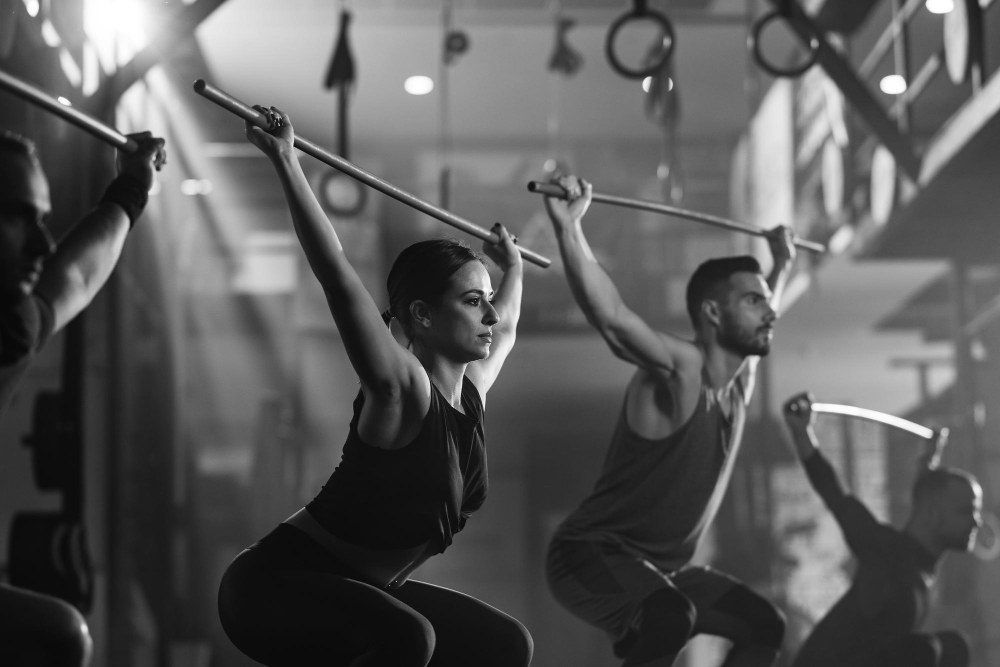
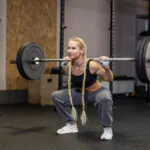
Group strength classes (Body Pump, Strength Train Together, barbell-based circuits) walk you through the foundational lifts — squat, deadlift, bench press, overhead press, row — in a structured 45 to 60 minute session. The instructor calls out tempo, rep counts, and form cues, and the music keeps the pace. You pick your own weight on each lift, so the same class works for a complete beginner and a guy who’s been training for years.
This is the class to take if you’ve been lifting alone, watching videos, and still not sure your squat is right. An hour with a good instructor will fix more form issues than three months of solo training. Most beginners start with the lightest plates on the barbell (about 15 to 20 pounds total) and add weight gradually as form locks in.
Best for: men who want muscle and strength but find solo lifting intimidating or aimless.
Boxing — cardio with a skill component

Boxing classes combine bag work, footwork drills, pad work, and bodyweight conditioning (jump rope, push-ups, sit-ups, burpees) into a 45 to 60 minute session that burns 500 to 800 calories. You’ll learn the four basic punches — jab, cross, hook, uppercut — plus stance, footwork, and defensive head movement.
The skill component is what makes boxing stick. Treadmills get boring; learning to throw a clean three-punch combination doesn’t. Most fitness boxing classes don’t involve sparring — you’re hitting bags and pads, not other people — so the injury risk stays low. Bring hand wraps for your first class; most gyms loan or rent gloves until you decide to buy your own.
Best for: men who hate steady-state cardio and want a workout that doubles as stress relief.
Boot camp — full-body conditioning in a group setting
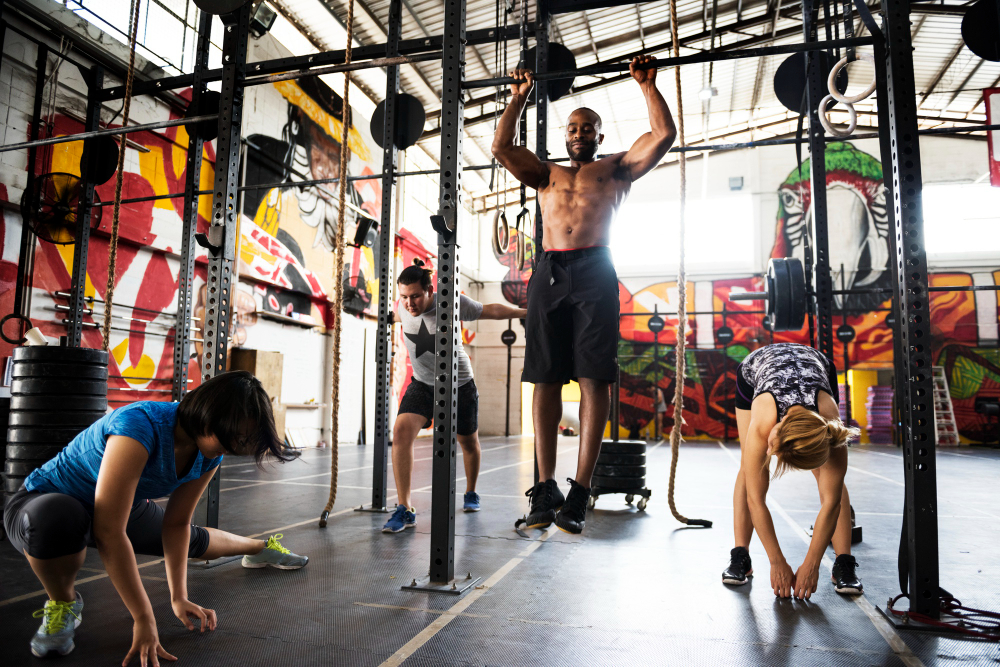
Boot camp classes blend strength, cardio, and bodyweight conditioning into 45 to 60 minute sessions structured around stations or AMRAP (as many rounds as possible) blocks. Expect kettlebells, dumbbells, sandbags, sleds, push-ups, lunges, planks, and short cardio bursts — every session is different, which keeps boredom out of the equation.
F45-style functional training has popularized this format because it gives you variety, community, and structure without requiring you to think. The trainer programs the workout; you show up and work. Most boot camps cap class size at 15 to 25, so you still get individual form correction. If you’re carrying extra weight or returning from a layoff, start with two sessions per week and add a third only after you’ve recovered cleanly from the first two.
Best for: men who get bored doing the same routine and want variety with built-in accountability.
Spin — high-intensity cardio that protects your joints
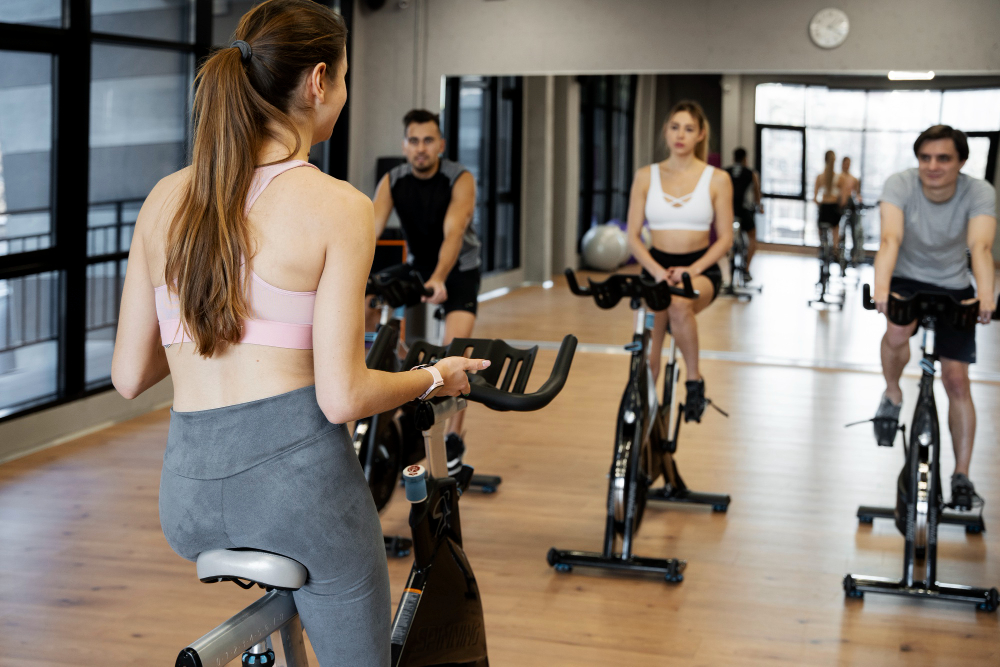
Spin (indoor cycling) classes run 30 to 60 minutes on stationary bikes, with the instructor calling out resistance changes, cadence shifts, and out-of-the-saddle climbs to simulate hills, sprints, and endurance rides. You’ll burn 400 to 700 calories depending on length and intensity, and because the bike takes the impact, your knees and ankles stay protected.
Spin is the best entry point on this list for men carrying extra weight or coming back from a lower-body injury. The resistance dial is yours — if a sprint interval is too much, you turn it down and keep pedaling. Get fitted to the bike before your first class: seat height should put a slight bend in your knee at the bottom of the pedal stroke. Padded shorts are optional for the first session but you’ll want them by the third.
Best for: men who want a high-intensity cardio workout without the joint impact of running.
How to pick your first class
Choose based on what you’re trying to fix, not what looks the most aggressive in the schedule. A quick decision frame:
- Want fat loss and conditioning fast → HIIT or boot camp.
- Want muscle and strength → group strength training.
- Hate treadmill cardio → boxing or spin.
- Joint issues, extra weight, or returning from injury → spin first, then group strength once form is solid.
- Easily bored → boot camp, where no two sessions are the same.
Two sessions per week is the floor for visible progress; three is better. If you’re doing classes plus solo training, build at least one rest day between high-intensity sessions, and consider adding mobility work — even 10 minutes of stretching after class — to recover faster. A post-workout sauna session helps too, if your gym has one.
What to expect from your first class
Show up 10 to 15 minutes early. Tell the front desk and the instructor it’s your first session — they’ll set you up with any equipment you need and flag the modifications you should use. Most beginner-friendly classes have built-in scaling: lighter weights, lower box heights, slower intervals, or seated variations on demand.
Bring water, a towel, and supportive shoes. For boxing, hand wraps. For spin, the gym usually provides clip-in shoes or lets you wear regular sneakers on cage pedals. Wear breathable clothing — cotton t-shirts soak through fast in HIIT or boot camp. You won’t need anything fancy.
Expect to be sore for two or three days after your first class regardless of which one you pick. That’s normal, not a sign you overdid it. Move around, hydrate, and the second class will feel meaningfully easier than the first.
Trying men’s fitness classes near you
Most well-equipped gyms run all five of these formats on a weekly schedule, and almost every gym offers a free trial pass or day pass so you can sit in before committing. Use the trial to try at least two different class types — HIIT and group strength is a good pairing — to see which holds your interest. The class you’ll actually come back to beats the one that looks best on paper.
If you’re in western North Carolina, HiTone Fitness Morganton offers a 3-day free pass and runs daily group classes across each of these formats.
Final thoughts
The best fitness class is the one you’ll actually keep coming back to. Try two or three different formats on a trial pass before committing, pick based on what fixes your biggest weakness rather than what looks toughest, and give any class three sessions before deciding it’s not for you — the first one is always the hardest. Get a 3-day free pass at HiTone Fitness Morganton to test-drive group classes across all five formats.
FAQs
How often should a male beginner take fitness classes?
Two classes per week is the minimum to see visible progress in 8 to 12 weeks; three is the sweet spot if your schedule and recovery allow. More than four high-intensity classes per week without solid sleep and nutrition usually backfires — you’ll feel run-down, lose strength, and stop showing up. Build to three sessions, hold there for a month, then decide whether to add more.
Are group fitness classes good for building muscle?
Yes, but only the right ones. Group strength classes built around barbells and progressive overload (Body Pump, Strength Train Together, barbell circuits) build real muscle. HIIT, boot camp, and circuit classes build muscular endurance and some lean mass, especially in untrained beginners, but they’re not optimized for hypertrophy. If muscle is your primary goal, pair a strength class with one or two solo lifting sessions per week.
What should I bring to my first men’s fitness class?
Water bottle, sweat towel, supportive athletic shoes, and breathable workout clothes. For boxing, add hand wraps (most gyms loan gloves for your first session). For spin, padded cycling shorts help by the second or third class. Skip the heavy pre-workout for your first session — you want to gauge your actual baseline, not a caffeinated version of it.
After your first class, the truths about post-workout sauna benefits are worth a read if your gym has one.